
Sabbath & Antichrist
Truth Revealed
Truth Revealed
Catholic Church Sabbath to Sunday statements
For extremely detailed information on who changed the Sabbath to Sunday, please read who changed the Sabbath to Sunday or the Sabbath to Sunday change.
“Most Christians assume that Sunday is the biblically approved day of worship. The Catholic Church protests that it transferred Christian worship from the biblical Sabbath (Saturday) to Sunday, and that to try to argue that the change was made in the Bible is both dishonest and a denial of Catholic authority. If Protestantism wants to base its teachings only on the Bible, it should worship on Saturday.” Rome’s Challenge http://www.immaculateheart.com/maryonline Dec 2003
“Is not every Christian obliged to sanctify Sunday and to abstain on that day from unnecessary servile work? Is not the observance of this law among the most prominent of our sacred duties? But you may read the Bible from Genesis to Revelation, and you will not find a single line authorizing the sanctification of Sunday. The Scriptures enforce the religious observance of Saturday, a day which we never sanctify.” James Cardinal Gibbons, The Faith of Our Fathers (1917 edition), p. 72-73 (16th Edition, p 111; 88th Edition, p. 89).
“For example, nowhere in the Bible do we find that Christ or the Apostles ordered that the Sabbath be changed from Saturday to Sunday. We have the commandment of God given to Moses to keep holy the Sabbath day, that is the 7th day of the week, Saturday. Today most Christians keep Sunday because it has been revealed to us by the [Roman Catholic] church outside the Bible.” Catholic Virginian, October 3, 1947, p. 9, article “To Tell You the Truth.”
Who Made Sunday Holy?
“Written by the finger of God on two tables of stone, this Divine code (ten commandments) was received from the Almighty by Moses amid the thunders of Mount Sinai…Christ resumed these Commandments in the double precept of charity–love of God and of the neighbour; He proclaimed them as binding under the New Law in Matthew 19 and in the Sermon on the Mount (Matthew 5)…The (Catholic) Church, on the other hand, after changing the day of rest from the Jewish Sabbath, or seventh day of the week, to the first, made the Third Commandment refer to Sunday as the day to be kept holy as the Lord’s Day…He (God) claims one day out of the seven as a memorial to Himself, and this must be kept holy…”The Catholic Encyclopaedia, vol. 4, “The Ten Commandments”, 1908 edition by Robert Appleton Company; and 1999 Online edition by Kevin Knight, Imprimatur, John M. Farley, Archbishop of New York.
“Written by the finger of God on two tables of stone, this Divine code (ten commandments) was received from the Almighty by Moses amid the thunders of Mount Sinai…Christ resumed these Commandments in the double precept of charity–love of God and of the neighbour; He proclaimed them as binding under the New Law in Matthew 19 and in the Sermon on the Mount (Matthew 5)…The (Catholic) Church, on the other hand, after changing the day of rest from the Jewish Sabbath, or seventh day of the week, to the first, made the Third Commandment refer to Sunday as the day to be kept holy as the Lord’s Day…He (God) claims one day out of the seven as a memorial to Himself, and this must be kept holy…”The Catholic Encyclopaedia, vol. 4, “The Ten Commandments”, 1908 edition by Robert Appleton Company; and 1999 Online edition by Kevin Knight, Imprimatur, John M. Farley, Archbishop of New York.
“Question: How prove you that the church had power to command feasts and holydays?
“Answer: By the very act of changing the Sabbath into Sunday, which Protestants allow of and therefore they fondly contradict themselves by keeping Sunday strictly, and breaking most other feasts commanded by the same church.
“Question: Have you any other way of proving that the church has power to institute festivals of precept?
“Answer: Had she not such power, she could not a done that in which all modern religionists agree with her; -she could not have substituted the observance of Sunday the first day of the week, for the observance of Saturday the seventh day of the week, a change for which there is no Scriptural authority.” Stephen Keenan, A Doctrinal Catechism On the Obedience Due to the Church, 3rd edition, Chapter 2, p. 174 (Imprimatur, John Cardinal McCloskey, Archbishop of New York).
“Answer: By the very act of changing the Sabbath into Sunday, which Protestants allow of and therefore they fondly contradict themselves by keeping Sunday strictly, and breaking most other feasts commanded by the same church.
“Question: Have you any other way of proving that the church has power to institute festivals of precept?
“Answer: Had she not such power, she could not a done that in which all modern religionists agree with her; -she could not have substituted the observance of Sunday the first day of the week, for the observance of Saturday the seventh day of the week, a change for which there is no Scriptural authority.” Stephen Keenan, A Doctrinal Catechism On the Obedience Due to the Church, 3rd edition, Chapter 2, p. 174 (Imprimatur, John Cardinal McCloskey, Archbishop of New York).
“Perhaps the boldest thing, the most revolutionary change the Church ever did, happened in the first century. The holy day, the Sabbath, was changed from Saturday to Sunday. ‘The day of the Lord’ was chosen, not from any direction noted in the Scriptures, but from the (Catholic) Church’s sense of its own power…People who think that the Scriptures should be the sole authority, should logically become 7th Day Adventists, and keep Saturday holy.” St. Catherine Church Sentinel, Algonac, Michigan, May 21, 1995.
“Nowhere in the Bible is it stated that worship should be changed from Saturday to Sunday…Now the Church…instituted, by God’s authority, Sunday as the day of worship. This same Church, by the same divine authority, taught the doctrine of Purgatory long before the Bible was made. We have, therefore, the same authority for Purgatory as we have for Sunday.” Martin J. Scott, Things Catholics Are Asked About, 1927 edition, p. 136.
“Question – Which is the Sabbath day?
“Answer – Saturday is the Sabbath day.
“Question – Why do we observe Sunday instead of Saturday?
“Answer – We observe Sunday instead of Saturday because the Catholic Church, in the Council of Laodicea (A.D. 364), transferred the solemnity from Saturday to Sunday.” Peter Geiermann, C.S.S.R., The Convert’s Catechism of Catholic Doctrine, p. 50, 3rd edition, 1957.
“Answer – Saturday is the Sabbath day.
“Question – Why do we observe Sunday instead of Saturday?
“Answer – We observe Sunday instead of Saturday because the Catholic Church, in the Council of Laodicea (A.D. 364), transferred the solemnity from Saturday to Sunday.” Peter Geiermann, C.S.S.R., The Convert’s Catechism of Catholic Doctrine, p. 50, 3rd edition, 1957.
“Is Saturday the seventh day according to the Bible and the Ten Commandments? I answer yes. Is Sunday the first day of the week and did the Church change the seventh day – Saturday – for Sunday, the first day? I answer yes. Did Christ change the day’? I answer no!”
“Faithfully yours, J. Card. Gibbons.” James Cardinal Gibbons, Archbishop of Baltimore, Md. (1877-1921), in a signed letter.
“Faithfully yours, J. Card. Gibbons.” James Cardinal Gibbons, Archbishop of Baltimore, Md. (1877-1921), in a signed letter.
“Question. – How prove you that the Church hath power to command feasts and holy days?
“Answer. – By the very act of changing Sabbath into Sunday which Protestants allow of; and therefore they fondly contradict themselves, by keeping Sunday strictly, and breaking most other feasts commanded by the same Church.
“Question. – How prove you that?
“Answer. – Because by keeping Sunday, they acknowledge the Church’s power to ordain feasts, and to command them under sin: and by not keeping the rest by her commanded, they again deny, in fact, the same power.” An Abridgment of the Christian Doctrine, composed by Henry Tuberville, p. 58.
“Answer. – By the very act of changing Sabbath into Sunday which Protestants allow of; and therefore they fondly contradict themselves, by keeping Sunday strictly, and breaking most other feasts commanded by the same Church.
“Question. – How prove you that?
“Answer. – Because by keeping Sunday, they acknowledge the Church’s power to ordain feasts, and to command them under sin: and by not keeping the rest by her commanded, they again deny, in fact, the same power.” An Abridgment of the Christian Doctrine, composed by Henry Tuberville, p. 58.
“Some theologians have held that God likewise directly determined the Sunday as the day of worship in the New Law, that He Himself has explicitly substituted the Sunday for the Sabbath. But this theory is now entirely abandoned. It is now commonly held that God simply gave His Church the power to set aside whatever day or days she would deem suitable as Holy Days. The (Roman Catholic) Church chose Sunday, the first day of the week, and in the course of time added other days as holy days.” John Laux, A Course in Religion for Catholic High Schools and Academies, 1936 edition, vol. 1, p. 51.
“Question. What warrant have you for keeping Sunday preferably to the ancient sabbath which was Saturday?
“Answer. We have for it the authority of the Catholic church and apostolic tradition.
“Question. Does the Scripture anywhere command the Sunday to be kept for the Sabbath?
“Answer. The Scripture commands us to hear the church (St.Matt.18:17; St. Luke 10:16), and to hold fast the traditions of the apostles. 2 Thess 2:15. But the Scripture does not in particular mention this change of the Sabbath.
“Answer. We have for it the authority of the Catholic church and apostolic tradition.
“Question. Does the Scripture anywhere command the Sunday to be kept for the Sabbath?
“Answer. The Scripture commands us to hear the church (St.Matt.18:17; St. Luke 10:16), and to hold fast the traditions of the apostles. 2 Thess 2:15. But the Scripture does not in particular mention this change of the Sabbath.
“St John speaks of the Lord’s day (Rev 1:10) but he does not tell us what day of the week that was, much less does he tell us what day was to take the place of the Sabbath ordained in the commandments. St.Luke speaks of the disciples meeting together to break bread on the first day of the week. Acts 20:7. And St. Paul (1 Cor.16:2) orders that on the first day of the week the Corinthians should lay in store what they designated to bestow in charity on the faithful in Judea: but neither the one or the other tells us that this first day of the week was to be henceforth a day of worship, and the Christian Sabbath; so that truly the best authority we have for this ancient custom is the testimony of the church. And therefore those who pretend to be such religious observers of Sunday, whilst they take no notice of other festivals ordained by the same church authority, show that they act more by humor, than by religion; since Sundays and holidays all stand upon the same foundation, namely the ordinance of the (Roman Catholic) church.” Catholic Christian Instructed, 17th edition, p. 272-273.
“Protestantism, in discarding the authority of the (Roman Catholic) Church, has no good reasons for its Sunday theory, and ought logically to keep Saturday as the Sabbath.” John Gilmary Shea, American Catholic Quarterly Review, January 1883.
“The Catholic church for over one thousand years before the existence of a Protestant, by virtue of her divine mission, changed the day from Saturday to Sunday…The Protestant World at its birth found the Christian Sabbath too strongly entrenched to run counter to its existence; it was therefore placed under the necessity of acquiescing in the arrangement, thus implying the (Catholic) Church’s right to change the day, for over three hundred years. The Christian Sabbath is therefore to this day, the acknowledged offspring of the Catholic Church as spouse of the Holy Ghost, without a word of remonstrance from the Protestant World.” James Cardinal Gibbons in the Catholic Mirror, September 23, 1983.
Whose Day of Worship is Sunday?
“They [the Protestants] deem it their duty to keep the Sunday holy. Why? Because the Catholic Church tells them to do so. They have no other reason…The observance of Sunday thus comes to be an ecclesiastical law entirely distinct from the divine law of Sabbath observance…The author of the Sunday law…is the Catholic Church.” Ecclesiastical Review, February 1914.
“They [the Protestants] deem it their duty to keep the Sunday holy. Why? Because the Catholic Church tells them to do so. They have no other reason…The observance of Sunday thus comes to be an ecclesiastical law entirely distinct from the divine law of Sabbath observance…The author of the Sunday law…is the Catholic Church.” Ecclesiastical Review, February 1914.
“The Sunday…is purely a creation of the Catholic Church.”American Catholic Quarterly Review, January 1883.
“Sunday…is the law of the Catholic Church alone…” American Sentinel (Catholic), June 1893.
“Sunday is a Catholic institution and its claim to observance can be defended only on Catholic principles…From beginning to end of Scripture there is not a single passage that warrants the transfer of weekly public worship from the last day of the week to the first.” Catholic Press, Sydney, Australia, August 1900.
“It is well to remind the Presbyterians, Baptists, Methodists, and all other Christians, that the Bible does not support them anywhere in their observance of Sunday. Sunday is an institution of the Roman Catholic Church, and those who observe the day observe a commandment of the Catholic Church.” Priest Brady, in an address reported in The News, Elizabeth, New Jersey, March 18, 1903.
Who Do We Reverence and Pay Homage to by Keeping Sunday Holy?
“From this we may understand how great is the authority of the church in interpreting or explaining to us the commandments of God – an authority which is acknowledged by the universal practice of the whole Christian world, even of those sects which profess to take the holy Scriptures as their sole rule of faith, since they observe as the day of rest not the seventh day of the week demanded by the Bible, but the first day. Which we know is to be kept holy, only from the tradition and teaching of the Catholic church.” Henry Gibson, Catechism Made Easy, #2, 9th edition, vol. 1, p. 341-342.
“From this we may understand how great is the authority of the church in interpreting or explaining to us the commandments of God – an authority which is acknowledged by the universal practice of the whole Christian world, even of those sects which profess to take the holy Scriptures as their sole rule of faith, since they observe as the day of rest not the seventh day of the week demanded by the Bible, but the first day. Which we know is to be kept holy, only from the tradition and teaching of the Catholic church.” Henry Gibson, Catechism Made Easy, #2, 9th edition, vol. 1, p. 341-342.
“It was the Catholic church which…has transferred this rest to Sunday in remembrance of the resurrection of our Lord. Therefore the observance of Sunday by the Protestants is an homage they pay, in spite of themselves, to the authority of the (Catholic) church.” Monsignor Louis Segur, Plain Talk About the Protestantism of Today, p. 213.
“Sunday is our mark or authority…the church is above the Bible, and this transference of Sabbath observance is proof of that fact.” Catholic Record of London, Ontario, September 1, 1923.
“Of course the Catholic Church claims that the change (Saturday Sabbath to Sunday) was her act…And the act is a mark of her ecclesiastical authority in religious things.” H.F. Thomas, Chancellor of Cardinal Gibbons.
“I have repeatedly offered $1,000 to anyone who can prove to me from the Bible alone that I am bound to keep Sunday holy. There is no such law in the Bible. It is a law of the holy Catholic Church alone. The Bible says, ‘Remember the Sabbath day to keep it holy.’ The Catholic Church says: ‘No. By my divine power I abolish the Sabbath day and command you to keep holy the first day of the week.’ And lo! The entire civilized world bows down in a reverent obedience to the command of the holy Catholic Church.” father T. Enright, C.S.S.R. of the Redemptoral College, Kansas City, in a lecture at Hartford, Kansas, February 18, 1884, printed in History of the Sabbath, p. 802. Hover hereFather Enright Sabbath for a document clip or select for full original image.
“Protestants…accept Sunday rather than Saturday as the day for public worship after the Catholic Church made the change…But the Protestant mind does not seem to realize that…In observing the Sunday, they are accepting the authority of the spokesman for the church, the Pope.” Our Sunday Visitor, February 15, 1950.
Conclusion and the Challenge.
“The (Roman Catholic) Church changed the observance of the Sabbath to Sunday by right of the divine, infallible authority given to her by her founder, Jesus Christ. The Protestant claiming the Bible to be the only guide of faith, has no warrant for observing Sunday.” The Catholic Universe Bulletin, August 14, 1942, p. 4.
“The (Roman Catholic) Church changed the observance of the Sabbath to Sunday by right of the divine, infallible authority given to her by her founder, Jesus Christ. The Protestant claiming the Bible to be the only guide of faith, has no warrant for observing Sunday.” The Catholic Universe Bulletin, August 14, 1942, p. 4.
“Sunday is founded, not of scripture, but on tradition, and is distinctly a Catholic institution. As there is no scripture for the transfer of the day of rest from the last to the first day of the week, Protestants ought to keep their Sabbath on Saturday and thus leave Catholics in full possession of Sunday.” Catholic Record, September 17, 1893.
“Regarding the change from the observance of the Jewish Sabbath to the Christian Sunday, I wish to draw your attention to the facts:
“1) That Protestants, who accept the Bible as the only rule of faith and religion, should by all means go back to the observance of the Sabbath. The fact that they do not, but on the contrary observe the Sunday, stultifies them in the eyes of every thinking man.
“2) We Catholics do not accept the Bible as the only rule of faith. Besides the Bible we have the living Church, the authority of the Church, as a rule to guide us. We say, this Church, instituted by Christ to teach and guide man through life, has the right to change the ceremonial laws of the Old Testament and hence, we accept her change of the Sabbath to Sunday. We frankly say, yes, the Church made this change, made this law, as she made many other laws, for instance, the Friday abstinence, the unmarried priesthood, the laws concerning mixed marriages, the regulation of Catholic marriages and a thousand other laws…
“It is always somewhat laughable, to see the Protestant churches, in pulpit and legislation, demand the observance of Sunday, of which there is nothing in their Bible.” Peter R. Kraemer, Catholic Church Extension Magazine, USA (1975), Chicago, Illinois, “Under the blessing of the Pope Pius XI”
“I am going to propose a very plain and serious question to those who follow ‘the Bible and the Bible only’ to give their most earnest attention. It is this: Why don’t you keep holy the Sabbath day?…
“The command of the Almighty God stands clearly written in the Bible in these words: ‘Remember the Sabbath day, to keep it holy. Six days shalt thou labor, and do all thy work; but the seventh day is the Sabbath of the Lord thy God; in it thou shalt not do any work.’ Exodus 20:8-10…
“You will answer me, perhaps, that you do keep the Sabbath; for that you abstain from all worldly business and diligently go to church, and say your prayers, and read your Bible at home every Sunday of your lives…
“But Sunday is not the Sabbath day. Sunday is the first day of the week: the Sabbath day is the seventh day of the week. Almighty God did not give a commandment that men should keep holy one day in seven; but He named His own day, and said distinctly: ‘Thou shalt keep holy the seventh day’; and He assigned a reason for choosing this day rather than any other – a reason which belongs only to the seventh day of the week, and cannot be applied to the rest. He says, ‘For in six days the Lord made heaven and earth, the sea and all that in them is, and rested on the seventh day: wherefore the Lord blessed the Sabbath day and hallowed it’, Exodus 20:11, Genesis 2:1-3. Almighty God ordered that all men should rest from their labor on the seventh day, because He too had rested on that day: He did not rest on Sunday, but on Saturday. On Sunday, which is the first day of the week, He began the work of creation; He did not finish it. It was on Saturday that He ‘ended His work which he had made: and God blessed the seventh day, and sanctified it: because that in it He had rested from all His work which God created and made.’ Genesis 2:2-3…
“Nothing can be more plain and easy to understand than all this; there is nobody who attempts to deny it. It is acknowledged by everybody that the day which Almighty God appointed to be kept holy was Saturday, not Sunday. Why do you then keep holy the Sunday and not Saturday?
“You will tell me that Saturday was the Jewish Sabbath, but that the Christian Sabbath has been changed to Sunday. Changed! But by whom? Who has the authority to change an express commandment of Almighty God? When God has spoken and said, ‘Thou shalt keep holy the seventh day’, who shall dare to say, ‘Nay, thou mayest work and do all manner of worldly business on the seventh day: but thou shalt keep holy the first day in its stead?’ This is a most important question, which I know not how you answer…
“You are a Protestant, and you profess to go by the Bible and the Bible only; and yet, in so important a manner as the observance of one day in seven as the holy day, you go against the plain letter of the Bible, and put another day in the place of that day which the Bible has commanded. The command to keep holy the seventh day is one of the Ten Commandments; you believe that the other nine are still binding. Who gave you authority to tamper with the fourth? If you are consistent with your own principles, if you really follow the Bible, and the Bible only you ought to be able to produce some portion of the New Testament in which this fourth commandment is expressly altered.” Excerpts from “Why Don’t You Keep Holy the Sabbath Day?”, pages 3-15 in The Clifton Tract, vol. 4, published by the Roman Catholic Church 1869.
“The arguments…are firmly grounded on the word of God, and having been closely studied with the Bible in hand, leave no escape for the conscientious Protestant except the abandonment of Sunday worship and the return to Saturday, commanded by their teacher, the Bible, or, unwilling to abandon the tradition of the Catholic Church, which enjoins the keeping of Sunday, and which they have accepted in direct opposition to their teacher, the Bible, consistently accept her (the Catholic Church) in all her teachings. Reason and common sense demand the acceptance of one or the other of these alternatives: either Protestantism and the keeping holy of Saturday, or Catholicism and the keeping holy of Sunday. Compromise is impossible.” James Cardinal Gibbons, in Catholic Mirror, December 23, 1893.
Today I want to answer the question which so many listeners have been concerned about since our first broadcast on the Sabbath question. How did the change take place, substituting Sunday for Saturday as the day of worship? This is possibly one of the most disturbing religious questions among thinking Christians today. Unfortunately, the issue is not examined publicly very often for reasons that we’ll consider today. But multitudes have wondered when, how and why the change came about. We have established in previous broadcasts that the Bible itself speaks with absolute consistency on this subject.
No Change Documented in the Bible
In both Old and New Testament there is not a shadow of variation in the doctrine of the Sabbath. The seventh day, Saturday, is the only day ever designated by the term Sabbath in the entire Bible. Not only was Jesus a perfect example in observing the weekly seventh-day Sabbath, but all His disciples followed the same pattern after Jesus had gone back to heaven. Yet no intimation of any change of the day is made. The apostle Paul, who wrote pages of counsel about lesser issues of Jewish and Gentile conflicts, had not one word to say about any controversy over the day of worship. Circumcision, foods offered to idols, and other Jewish customs were readily challenged by early Gentile Christians in the church, but the weightier matter of weekly worship never was an issue. Why? For the simple reason that no change was made from the historic seventh day of Old Testament times, and from creation itself. Had there been a switch from the Sabbath to the first day of the week, you can be sure the controversy would have been more explosive than any other to those Jewish Christians.
History Gives Some Clues
If the change did not take place in the Scriptures or through the influence of the apostles, when and how did it happen? In order to understand this, we must understand what happened in that early church soon after the apostles passed off the stage of action. Paul had prophesied that apostasy would take place soon after his departure. He said there would be a falling away from the truth. One doesn’t have to read very far in early church history to see just how that prophecy was fulfilled. Gnosticism began to rise up under the influence of philosophers who sought to reconcile Christianity with Paganism. At the same time, a strong anti-Jewish sentiment became more widespread. Very speculative interpretations began to appear regarding some of the great doctrines of Christ and the apostles.
The Conversion of Constantine
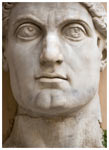 By the time Constantine was established as the emperor of Rome in the early fourth century, there was a decided division in the church as a result of all these factors. I think most of you know that Constantine was the first so-called Christian emperor of the Roman Empire. The story of his conversion has become very well known to students of ancient history. He was marching forth to fight the battle of Milvian Bridge when he had some kind of vision, and saw a flaming cross in the sky. Underneath the cross were the Latin words meaning “In this sign conquer.” Constantine took this as an omen that he should be a Christian, and his army as well. He declared all his pagan soldiers to be Christians, and became very zealous to build up the power and prestige of the church. Through his influence great blocks of pagans were taken into the Christian ranks. But, friends, they were still pagan at heart, and they brought in much of the paraphernalia of sun-worship to which they continued to be devoted. We mentioned in a previous broadcast about the adoption of Christmas and Easter into the church. At the same time, many other customs were Christianized and appropriated into the practice of the church as well.
Sun Worship
You see, at that time the cult of Mithraism or sun-worship was the official religion of the Roman Empire. It stood as the greatest competitor to the new Christian religion. It had its own organization, temples, priesthood, robes—everything. It also had an official worship day on which special homage was given to the sun. That day was called “The Venerable Day of the Sun.” It was the first day of the week, and from it we get our name Sunday. When Constantine pressed his pagan hordes into the church they were observing the day of the sun for their adoration of the sun god. It was their special holy day. In order to make it more convenient for them to make the change to the new religion, Constantine accepted their day of worship, Sunday, instead of the Christian Sabbath which had been observed by Jesus and His disciples. Remember that the way had been prepared for this already by the increasing anti-Jewish feelings against those who were accused of putting Jesus to death. Those feelings would naturally condition many Christians to swing away from something which was held religiously by the Jews. It is therefore easier to understand how the change was imposed on Christianity through a strong civil law issued by Constantine as the Emperor of Rome. The very wording of that law, by the way, can be found in any reliable encyclopedia. Those early Christians, feeling that the Jews should not be followed any more than necessary, were ready to swing away from the Sabbath which was kept by the Jews.
Historical Accounts
Some of you may be greatly surprised by the explanation I’ve just made, and I’m not going to ask you to believe it blindly. I have before me a multitude of authorities to verify what has been said. Here are historians, Catholics and Protestants, speaking in harmony about what actually took place in the fourth century. After Constantine made the initial pronouncement and legal decree about the change, the Catholic Church reinforced that act in one church council after another. For this reason, many, many official statements from Catholic sources are made, claiming that the church made the change from Saturday to Sunday. But before I read those statements I shall refer to one from the Encyclopedia Britannica under the article, Sunday. Notice: “It was Constantine who first made a law for the proper observance of Sunday and who appointed that it should be regularly celebrated throughout the Roman empire.” Now you can check these statements in your own encyclopedias or go to the library and look into other historical sources.
Here is a statement from Dr. Gilbert Murray, M.A., D.Litt., LLD, FBA, Professor of Greek at Oxford University, who certainly had no ax to grind concerning Christian thought on the Sabbath question. He wrote: “Now since Mithras was the sun, the Unconquered, and the sun was the Royal Star, the religion looked for a king whom it could serve as a representative of Mithras upon earth. The Roman Emperor seemed to be clearly indicated as the true king. In sharp contrast to Christianity, Mithraism recognized Caesar as the bearer of divine grace. It had so much acceptance that it was able to impose on the Christian world its own sun-day in place of the Sabbath; its sun’s birthday, the 25th of December, as the birthday of Jesus.” History of Christianity in the Light of Modern Knowledge.
Looking a bit further into historical statements, Dr. William Frederick says: “The Gentiles were an idolatrous people who worshipped the sun, and Sunday was their most sacred day. Now in order to reach the people in this new field, it seems but natural as well as necessary to make Sunday the rest day of the church. At this time it was necessary for the church to either adopt the Gentile’s day or else have the Gentiles change their day. To change the Gentiles day would have been an offense and stumbling block to them. The church could naturally reach them better by keeping their day.” There it is, friends, a clear explanation by Dr. Frederick as to how this change happened. Another statement very parallel to this one is found in the North British Review.
But let’s move on to a statement from the Catholic Encyclopedia, Vol. 4, p. 153. “The church after changing the day of rest from the Jewish Sabbath or seventh-day of the week to the first, made the third commandment refer to Sunday as the day to be kept holy as the Lord’s day.”
Catholicism Takes Credit for the Change
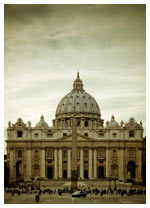 Now a quote from the Catholic Press newspaper in Sidney, Australia. “Sunday is a Catholic institution and its claims to observance can be defended only on Catholic principles. From the beginning to end of Scripture there is not a single passage that warrants the transfer of weekly public worship from the last day of the week to the first.”
The Catholic Mirror of September 23, 1894, puts it this way: “The Catholic Church for over one thousand years before the existence of a Protestant by virtue of her divine mission, changed the day from Saturday to Sunday.”
To point up the claims we’re talking about, I want to read from two Catechisms. First, from the Convert’s Catechism of Catholic Doctrine by Reverend Peter Giermann. “Question: Which is the Sabbath day? Answer: Saturday is the Sabbath day. Question: Why do we observe Sunday instead of Saturday? Answer: We observe Sunday instead of Saturday because the Catholic Church in the Council of Laodicea transferred the solemnity from Saturday to Sunday.”
Second, from Reverend Steven Keenan’s Doctrinal Catechism we read this: “Question: Have you any other way of proving that the Church has power to institute festivals of precept? Answer: Had she not such power, she could not have done that in which all modern religionists agree with her; she could not have substituted the observance of Sunday, the first day of the week, for the observance of Saturday, the seventh day; a change for which there is no Scriptural authority.”
Then from Cardinal Gibbons’ book, The Question Box, p.179, “If the Bible is the only guide for the Christian, then the Seventh-day Adventist is right in observing Saturday with the Jew. Is it not strange that those who make the Bible their only teacher should inconsistently follow in this matter the tradition of the Catholic Church?”
One more statement taken from the book, The Faith of Millions, p. 473. “But since Saturday, not Sunday, is specified in the Bible, isn’t it curious that non-Catholics who profess to take their religion directly from the Bible and not from the Church, observe Sunday instead of Saturday? Yes, of course, it is inconsistency but this change was made about fifteen centuries before Protestantism was born, and by that time the custom was universally observed. They have continued the custom even though it rests upon the authority of the Catholic Church and not upon an explicit text from the Bible. That observance remains as a reminder of the Mother Church from which the non-Catholic sects broke away like a boy running away from home but still carrying in his pocket a picture of his mother or a lock of her hair.”
That is a most interesting statement, is it not, friends? And it is a very true statement. There is some inconsistency somewhere along the line, because we have examined the statements of history, and you can check them for yourself in any library. I’m not reading anything one-sided here at all. I’ve tried to give you an unbiased picture. Although we have seen the claims made by the Catholic Church in their publications, we are not reading them to cast any reflection upon anyone, by any means. We are simply bringing you a recital of what has been written and what claims have been made.
Catholics and Protestants How big are the differences?  By Dennis Pollock Catholics and Protestants “The Roman Catholic Church is a counterfeit… of the worst and most diabolical kind… to be rejected and denounced.” — Dr. Martin Lloyd Jones “I’m eradicating the word Protestant even out of my vocabulary .. I’m not protesting anything… It’s time for Catholics and non-Catholics to come together as one in the Spirit and one in the Lord.” — Paul Crouch on TBN When twenty Evangelical and twenty Catholic leaders signed the document, Evangelicals and Catholics Together: The Christian Mission in the Third Millennium, (or ECT for short), in the spring of 1994, it set off a firestorm of controversy which shows no indications of letting up. Signed by such Christian leaders as Bill Bright, Charles Colson and Pat Robertson, this document suggests that the time has come for Evangelicals and Catholics to walk together and recognize that they must unite in battle against the common foes of humanism and relativism, and agree to stop proselytizing one another. Reactions to ECT Several major figures in evangelical Christianity have strongly disagreed. Men such as John MacArthur, R. C. Sproul, John Ankerberg, James Kennedy, and Dave Hunt have contended that ECT is a minimizing of the truth of justification by faith, gives the false impression that any doctrinal differences between Catholics and Protestants are small and of little importance, and mocks the Reformation as irrelevant and unnecessary. The editors of Charisma magazine recently devoted their July issue to this controversy. In two major articles, “What Protestants Should Know About Catholics,” and “What Catholics Should Know About Protestants,” they attempted, by their own admission, to “help us find common ground.” The first article was by Keith Fournier, an evangelical Catholic lawyer who serves as an apologist for the Catholics to the evangelical community. He attempts to convince Charisma’s mostly evangelical readers that the Catholic church really is legitimate and is not that far from the Evangelicals. His first main point is that “the Catholic Church is Christian.” He goes on to try to defuse some of the hot buttons to which most Protestants object, admitting that not all Catholics are converted, and insisting that Catholics believe the Bible, do not worship Mary, and believe in salvation by grace. Charismatic Catholics In the 1960’s and 70’s a phenomenon began happening in the Catholic Church that would have never been believed by some of the fiery reformers and revivalists of previous generations. Priests, nuns, and thousands of ordinary Catholics began to come into a new experience with Jesus and with the Holy Spirit. Catholics began doing things that seemed decidedly un-Catholic as they met together in homes for prayer meetings, danced “in the Spirit,” spoke in tongues, laid hands on the sick, and openly witnessed to others about their faith in Jesus. Many Evangelicals (myself included) began to believe for the first time that it just might be possible for one to be a Catholic and be saved. They sang the same songs that we did, actually read their Bibles, and sometimes seemed to even outshine us in their zeal for Jesus. Practically from the moment that this began happening, questions began to arise not too dissimilar to those that the believing Jews were debating in the early church as they wondered what to do with the Gentiles who had put their faith in the Messiah. This time we were wondering what to do with the Catholics. Should we encourage them to “flee Babylon” or should we preserve unity by urging them to stay in their churches and be a witness for Jesus to the others? While many offered opinions, the question never really did get resolved. Some left, some stayed, and gradually things began to get back to normal. Today the question, although in a different form, has resurfaced. It is not one which can be lightly answered. I have been around long enough to know that there are most definitely Catholics who love the Lord Jesus. Certainly I have known Catholics that I could fellowship with at a far deeper level than any liberal Protestants, and even many Fundamentalists. But this is not really the issue. Nearly all Protestants will (or should) admit that there are Catholics who have been born again and who are legitimate brothers and sisters in Christ. Some of the questions raised by the ECT document are as follows: Is the Catholic Church as a whole a Christian Church? Would an individual who strictly followed the official Catholic position on salvation be truly saved? Are the differences between Protestants and Catholics merely minor and insignificant? Would the Catholic Church be a healthy place to be for a new convert who knew almost nothing about Christian truth? Differences of a Minor Kind In attempting to answer these kinds of questions, it is important to “major on the majors and minor on the minors.” Before we can do this, however, we must first establish what the majors and minors are. Certainly, even in the ranks of evangelical Christians, there are many differences in styles and practices of worship. Some churches offer communion once a month and others insist it must be offered every Sunday. Some churches sing ancient songs from hymnals and others project peppy praise choruses on a screen with an overhead projector. Certain churches emphasize teachings about God’s desire to bless His people in this present world, while others focus more upon heavenly blessings in the age to come. While we may look critically at the way other churches do things, we still think of their members as brothers and sisters in the Lord, even though we may consider them to be misguided. As we consider the Catholic Church, most Protestants don’t have to look long to find things that they are uncomfortable with. Confessing sins to a priest, using rosary beads, giving allegiance to the Pope, praying to the saints, and believing in the notion of purgatory are all alien to a Protestant’s Christian perspective. But one of life’s really demanding challenges is knowing what’s worth making an issue about. For example, I think the idea of regularly confessing one’s sins to a priest is unbiblical and unnecessary. Yet, if Catholics want to do that, I am not going to go on an “anti-confessional” crusade. I feel no need to borrow my son’s baseball bat and rush into Catholic churches, Carrie Nation style, to smash up confessional booths. There are a number of other practices that would fall into this category. The robes worn by the priests seem pretentious. Praying with beads smacks of superstition. Having their churches filled with statues of the saints makes me uncomfortable. Demanding that all adherents attend church once a week upon threat of mortal sin seems legalistic. Yet these things, while foreign to non-Catholics and having little or no biblical basis, should not, in themselves, be enough to keep Evangelicals and Catholics from working together as brothers and sisters in Christ or from recognizing the legitimacy of one another’s faith. If God only accepted as His children those Christians who walk in perfect understanding and whose churches are the perfect expression of His mind and will, heaven would be a sparsely populated place indeed. When we look at the vast differences between the Methodists and the Pentecostals, the Baptists and the Churches of Christ, it becomes obvious that we must either allow for some pretty big differences of worship and practice, or else cling to that cultish arrogance which says that our little group is the only one God is interested in. Bigger Problems If the differences between Catholics and Protestants were simply a manner of form and style, there would be no reason for concern over the ECT document. Sadly, there are bigger issues involved, much bigger issues. Consider the Catholics’ preoccupation with Mary. The Catholic apologists, such as Keith Fournier, would have us to believe that they do not worship, or even pray to Mary. Fournier writes: “Catholics venerate Mary… (they) only worship and pray to the Creator, not to creatures… poorly catechized Catholics have at times gone to extremes and appeared to elevate Mary over Jesus. But their mistaken piety does not reflect the teaching of the Catholic church.” Thus it is all a big misunderstanding. Catholics and Protestants alike respect Mary as a wonderful woman of God, so what’s the problem? The problem is that “it just ain’t so!” The last Pope, John Paul II, had the Latin words “totus tuus sum Maria” (Mary, I’m yours) embroidered on the inside of his robes, and he had attributed his escape from death at the hands of an assassin to Mary, acknowledging, “For everything that happened to me on that day, I felt that extraordinary Motherly protection and care, which turned out to be stronger than bullets.” In his petition to Mary at the close of the Sunday Mass in Denver in August, 1993, the Pope prayed: “Mary of the New Advent, we implore your protection on the preparations that will now begin for the next meeting. Mary, full of grace, we entrust the next World Youth Day to you. Mary, assumed into heaven, we entrust the young people of the world… the whole world to you.” Is this the prayer of a poorly catechized, extremist Catholic? If the Pope prays to Mary and commits all the world’s youth to her, what should we expect from the rest of the church? Bishop Fulton J. Sheen declared: “When I was ordained, I took a resolution to offer the Holy Sacrifice of the Eucharist every Saturday to the Blessed Mother… All this makes me very certain that when I go before the Judgment Seat of Christ, He will say to me in His Mercy: ‘I heard My Mother speak of you.'” Major Catholic leaders have consistently worshipped Mary and seen in her the key to their salvation. St. Bonaventure said, “the gates of heaven will open to all who confide in the protection of Mary.” St. Ephrem called devotion to the divine Mother “the unlocking of the gates of the heavenly Jerusalem.” Blosius said, “We ought constantly to pray to her… ‘Open to us, O Mary, the gates of paradise, since thou hast its keys.'” Friends, we are no longer talking about differences in styles of worship. These things get right to the heart of what is Christianity, and what it is that makes one a Christian. This unhealthy, idolatrous preoccupation with Mary is utterly without any basis in Scripture and is, no doubt, responsible for sending countless millions into hell, vainly trusting in the “Queen of Heaven” rather than the Prince of Peace. Another Gospel The apostle Paul took the gospel seriously, so seriously that he even referred to it as “my gospel” (Romans 2:16). He declared that any who would try to pervert the gospel or come up with some false version of it should be totally disregarded, even if they came with the appearance of an angel from heaven (Galatians 1:8). The ultimate factor in deciding the legitimacy of the Catholic Church is its presentation of the gospel, its answer to the age-old question of “What must I do to be saved?” The Catholic apologists argue strongly that the Catholics, like the Protestants, believe in salvation by grace through faith. Keith Fournier declares, “As the Catholic Church teaches, we are converted to Christ by our faith, not because of our good works; and we do good works only because we have the divine grace to do so.” This sounds very evangelical; Billy Graham could not have said it better. The trouble is that in order for us to find out the position of the Catholic Church we must look beyond the apologists. These are often born again believers themselves, who have indeed found Christ through personal faith, and are eager to have the world believe that Catholics and Evangelicals are but two flavors of the same church. To anyone who bothers to do much reading on the Catholic position on salvation, the truth becomes readily apparent — the official position of the church is that salvation comes through grace, but the grace is distributed a little at a time through the official sacraments of the Roman Catholic Church. The Council of Trent proclaimed: “If anyone says that the sacraments… are not necessary for salvation but… that without them… men obtain from God through faith alone the grace of justification… let him be anathema.” The Vatican II Apostolic Constitution declares: “Following in Christ’s steps, those who believe in Him have always… carried their crosses to make expiation for their own sins and the sins of others…” Anyone who is familiar with the writings of Paul will immediately realize what incredible blasphemies these quotes are! They mock the cross of Christ and show utter disregard for the very heart of New Testament theology. This is no small issue. No matter how much help our Catholic friends may be in working with us in the great moral reforms of our day, we would be less than loving to disregard their blatant misconceptions and try to pretend that we are one in the Lord, and that, as Pat Robertson has suggested, “While there may be differences between the two faith communities, it is time that we focus on the similarities.” We are not talking about the differences between blue or red choir robes, we are talking about two diametrically opposed belief systems which cannot possibly both be true. Even Catholic apologist Peter Kreeft admits: “Over the past 25 years I have asked hundreds of Catholic college students the question: If you should die tonight and God asks you why He should let you into heaven, what would you answer? The vast majority of them simply do not know the right answer to this, the most important of all questions, the very essence of Christianity. They usually do not even mention Jesus!” If someone I cared about had just been born again, and was now studying theology in the Catholic Church, I would be deeply concerned. If he were to believe the official Catholic teachings, he soon would no longer trust in Christ alone for his salvation, but would be putting his faith in Mary, communion, baptism, and a number of other sacraments and works, and according to Galatians, would be fallen from grace and alienated from Christ (Galatians 5:4). I would do anything I could to get him out of that church and into one which teaches that grand old biblical doctrine of justification by faith in Christ alone. Yes, there are certainly wonderful born again Catholic brothers and sisters in Christ, and I praise God for them. May their numbers increase by millions more! But we must not approve nor should we endorse any system which makes our Savior’s death only a partial payment for the sins of mankind. When Jesus said, “It is done,” it was done! Other Information Sources About Catholicism Dave Hunt’s book, A Woman Rides the Beast. This book, which was published by Harvest House this year, is available from Dave Hunt’s ministry for a cost of $10 (plus $2 for postage and handling). Write to The Berean Call, P.O. Box 7019, Bend, Or. 97708 (503/382-6210). This is a well documented study of Catholic history and theology. Dave Reagan’s article, “Roman Catholicism: Is it the ‘Whore of Babylon?'” Mike Gendron’s ministry called Proclaiming the Gospel to Catholics. Mike is a former Catholic and has many resource materials available. His address is 2706 Lancaster St., Garland, Texas 75044 (214/495-0485). Richard M. Bennett’s ministry called Berean Beacon. Richard is a former Catholic Priest. His address is P.O. Box 55353, Portland, Or. 97238 (503/257-5995). A new book that he has just published is called Far from Rome, Near to God. It contains the testimonies of 50 former Catholic priests. It sells for $10 (plus $2 for postage and handling) and can be ordered directly from Richard’s ministry. “Six Roman Catholic Doctrines that Nullify Salvation by Grace,” by Albert James Dager of Media Spotlight Ministries, P.O. Box 290, Redmond, Wa. 98073. This very fine booklet (47 pages) is available for a donation of any amount. More From This Category
 By Dennis Pollock Catholics and Protestants “The Roman Catholic Church is a counterfeit… of the worst and most diabolical kind… to be rejected and denounced.” — Dr. Martin Lloyd Jones “I’m eradicating the word Protestant even out of my vocabulary .. I’m not protesting anything… It’s time for Catholics and non-Catholics to come together as one in the Spirit and one in the Lord.” — Paul Crouch on TBN When twenty Evangelical and twenty Catholic leaders signed the document, Evangelicals and Catholics Together: The Christian Mission in the Third Millennium, (or ECT for short), in the spring of 1994, it set off a firestorm of controversy which shows no indications of letting up. Signed by such Christian leaders as Bill Bright, Charles Colson and Pat Robertson, this document suggests that the time has come for Evangelicals and Catholics to walk together and recognize that they must unite in battle against the common foes of humanism and relativism, and agree to stop proselytizing one another. Reactions to ECT Several major figures in evangelical Christianity have strongly disagreed. Men such as John MacArthur, R. C. Sproul, John Ankerberg, James Kennedy, and Dave Hunt have contended that ECT is a minimizing of the truth of justification by faith, gives the false impression that any doctrinal differences between Catholics and Protestants are small and of little importance, and mocks the Reformation as irrelevant and unnecessary. The editors of Charisma magazine recently devoted their July issue to this controversy. In two major articles, “What Protestants Should Know About Catholics,” and “What Catholics Should Know About Protestants,” they attempted, by their own admission, to “help us find common ground.” The first article was by Keith Fournier, an evangelical Catholic lawyer who serves as an apologist for the Catholics to the evangelical community. He attempts to convince Charisma’s mostly evangelical readers that the Catholic church really is legitimate and is not that far from the Evangelicals. His first main point is that “the Catholic Church is Christian.” He goes on to try to defuse some of the hot buttons to which most Protestants object, admitting that not all Catholics are converted, and insisting that Catholics believe the Bible, do not worship Mary, and believe in salvation by grace. Charismatic Catholics In the 1960’s and 70’s a phenomenon began happening in the Catholic Church that would have never been believed by some of the fiery reformers and revivalists of previous generations. Priests, nuns, and thousands of ordinary Catholics began to come into a new experience with Jesus and with the Holy Spirit. Catholics began doing things that seemed decidedly un-Catholic as they met together in homes for prayer meetings, danced “in the Spirit,” spoke in tongues, laid hands on the sick, and openly witnessed to others about their faith in Jesus. Many Evangelicals (myself included) began to believe for the first time that it just might be possible for one to be a Catholic and be saved. They sang the same songs that we did, actually read their Bibles, and sometimes seemed to even outshine us in their zeal for Jesus. Practically from the moment that this began happening, questions began to arise not too dissimilar to those that the believing Jews were debating in the early church as they wondered what to do with the Gentiles who had put their faith in the Messiah. This time we were wondering what to do with the Catholics. Should we encourage them to “flee Babylon” or should we preserve unity by urging them to stay in their churches and be a witness for Jesus to the others? While many offered opinions, the question never really did get resolved. Some left, some stayed, and gradually things began to get back to normal. Today the question, although in a different form, has resurfaced. It is not one which can be lightly answered. I have been around long enough to know that there are most definitely Catholics who love the Lord Jesus. Certainly I have known Catholics that I could fellowship with at a far deeper level than any liberal Protestants, and even many Fundamentalists. But this is not really the issue. Nearly all Protestants will (or should) admit that there are Catholics who have been born again and who are legitimate brothers and sisters in Christ. Some of the questions raised by the ECT document are as follows: Is the Catholic Church as a whole a Christian Church? Would an individual who strictly followed the official Catholic position on salvation be truly saved? Are the differences between Protestants and Catholics merely minor and insignificant? Would the Catholic Church be a healthy place to be for a new convert who knew almost nothing about Christian truth? Differences of a Minor Kind In attempting to answer these kinds of questions, it is important to “major on the majors and minor on the minors.” Before we can do this, however, we must first establish what the majors and minors are. Certainly, even in the ranks of evangelical Christians, there are many differences in styles and practices of worship. Some churches offer communion once a month and others insist it must be offered every Sunday. Some churches sing ancient songs from hymnals and others project peppy praise choruses on a screen with an overhead projector. Certain churches emphasize teachings about God’s desire to bless His people in this present world, while others focus more upon heavenly blessings in the age to come. While we may look critically at the way other churches do things, we still think of their members as brothers and sisters in the Lord, even though we may consider them to be misguided. As we consider the Catholic Church, most Protestants don’t have to look long to find things that they are uncomfortable with. Confessing sins to a priest, using rosary beads, giving allegiance to the Pope, praying to the saints, and believing in the notion of purgatory are all alien to a Protestant’s Christian perspective. But one of life’s really demanding challenges is knowing what’s worth making an issue about. For example, I think the idea of regularly confessing one’s sins to a priest is unbiblical and unnecessary. Yet, if Catholics want to do that, I am not going to go on an “anti-confessional” crusade. I feel no need to borrow my son’s baseball bat and rush into Catholic churches, Carrie Nation style, to smash up confessional booths. There are a number of other practices that would fall into this category. The robes worn by the priests seem pretentious. Praying with beads smacks of superstition. Having their churches filled with statues of the saints makes me uncomfortable. Demanding that all adherents attend church once a week upon threat of mortal sin seems legalistic. Yet these things, while foreign to non-Catholics and having little or no biblical basis, should not, in themselves, be enough to keep Evangelicals and Catholics from working together as brothers and sisters in Christ or from recognizing the legitimacy of one another’s faith. If God only accepted as His children those Christians who walk in perfect understanding and whose churches are the perfect expression of His mind and will, heaven would be a sparsely populated place indeed. When we look at the vast differences between the Methodists and the Pentecostals, the Baptists and the Churches of Christ, it becomes obvious that we must either allow for some pretty big differences of worship and practice, or else cling to that cultish arrogance which says that our little group is the only one God is interested in. Bigger Problems If the differences between Catholics and Protestants were simply a manner of form and style, there would be no reason for concern over the ECT document. Sadly, there are bigger issues involved, much bigger issues. Consider the Catholics’ preoccupation with Mary. The Catholic apologists, such as Keith Fournier, would have us to believe that they do not worship, or even pray to Mary. Fournier writes: “Catholics venerate Mary… (they) only worship and pray to the Creator, not to creatures… poorly catechized Catholics have at times gone to extremes and appeared to elevate Mary over Jesus. But their mistaken piety does not reflect the teaching of the Catholic church.” Thus it is all a big misunderstanding. Catholics and Protestants alike respect Mary as a wonderful woman of God, so what’s the problem? The problem is that “it just ain’t so!” The last Pope, John Paul II, had the Latin words “totus tuus sum Maria” (Mary, I’m yours) embroidered on the inside of his robes, and he had attributed his escape from death at the hands of an assassin to Mary, acknowledging, “For everything that happened to me on that day, I felt that extraordinary Motherly protection and care, which turned out to be stronger than bullets.” In his petition to Mary at the close of the Sunday Mass in Denver in August, 1993, the Pope prayed: “Mary of the New Advent, we implore your protection on the preparations that will now begin for the next meeting. Mary, full of grace, we entrust the next World Youth Day to you. Mary, assumed into heaven, we entrust the young people of the world… the whole world to you.” Is this the prayer of a poorly catechized, extremist Catholic? If the Pope prays to Mary and commits all the world’s youth to her, what should we expect from the rest of the church? Bishop Fulton J. Sheen declared: “When I was ordained, I took a resolution to offer the Holy Sacrifice of the Eucharist every Saturday to the Blessed Mother… All this makes me very certain that when I go before the Judgment Seat of Christ, He will say to me in His Mercy: ‘I heard My Mother speak of you.'” Major Catholic leaders have consistently worshipped Mary and seen in her the key to their salvation. St. Bonaventure said, “the gates of heaven will open to all who confide in the protection of Mary.” St. Ephrem called devotion to the divine Mother “the unlocking of the gates of the heavenly Jerusalem.” Blosius said, “We ought constantly to pray to her… ‘Open to us, O Mary, the gates of paradise, since thou hast its keys.'” Friends, we are no longer talking about differences in styles of worship. These things get right to the heart of what is Christianity, and what it is that makes one a Christian. This unhealthy, idolatrous preoccupation with Mary is utterly without any basis in Scripture and is, no doubt, responsible for sending countless millions into hell, vainly trusting in the “Queen of Heaven” rather than the Prince of Peace. Another Gospel The apostle Paul took the gospel seriously, so seriously that he even referred to it as “my gospel” (Romans 2:16). He declared that any who would try to pervert the gospel or come up with some false version of it should be totally disregarded, even if they came with the appearance of an angel from heaven (Galatians 1:8). The ultimate factor in deciding the legitimacy of the Catholic Church is its presentation of the gospel, its answer to the age-old question of “What must I do to be saved?” The Catholic apologists argue strongly that the Catholics, like the Protestants, believe in salvation by grace through faith. Keith Fournier declares, “As the Catholic Church teaches, we are converted to Christ by our faith, not because of our good works; and we do good works only because we have the divine grace to do so.” This sounds very evangelical; Billy Graham could not have said it better. The trouble is that in order for us to find out the position of the Catholic Church we must look beyond the apologists. These are often born again believers themselves, who have indeed found Christ through personal faith, and are eager to have the world believe that Catholics and Evangelicals are but two flavors of the same church. To anyone who bothers to do much reading on the Catholic position on salvation, the truth becomes readily apparent — the official position of the church is that salvation comes through grace, but the grace is distributed a little at a time through the official sacraments of the Roman Catholic Church. The Council of Trent proclaimed: “If anyone says that the sacraments… are not necessary for salvation but… that without them… men obtain from God through faith alone the grace of justification… let him be anathema.” The Vatican II Apostolic Constitution declares: “Following in Christ’s steps, those who believe in Him have always… carried their crosses to make expiation for their own sins and the sins of others…” Anyone who is familiar with the writings of Paul will immediately realize what incredible blasphemies these quotes are! They mock the cross of Christ and show utter disregard for the very heart of New Testament theology. This is no small issue. No matter how much help our Catholic friends may be in working with us in the great moral reforms of our day, we would be less than loving to disregard their blatant misconceptions and try to pretend that we are one in the Lord, and that, as Pat Robertson has suggested, “While there may be differences between the two faith communities, it is time that we focus on the similarities.” We are not talking about the differences between blue or red choir robes, we are talking about two diametrically opposed belief systems which cannot possibly both be true. Even Catholic apologist Peter Kreeft admits: “Over the past 25 years I have asked hundreds of Catholic college students the question: If you should die tonight and God asks you why He should let you into heaven, what would you answer? The vast majority of them simply do not know the right answer to this, the most important of all questions, the very essence of Christianity. They usually do not even mention Jesus!” If someone I cared about had just been born again, and was now studying theology in the Catholic Church, I would be deeply concerned. If he were to believe the official Catholic teachings, he soon would no longer trust in Christ alone for his salvation, but would be putting his faith in Mary, communion, baptism, and a number of other sacraments and works, and according to Galatians, would be fallen from grace and alienated from Christ (Galatians 5:4). I would do anything I could to get him out of that church and into one which teaches that grand old biblical doctrine of justification by faith in Christ alone. Yes, there are certainly wonderful born again Catholic brothers and sisters in Christ, and I praise God for them. May their numbers increase by millions more! But we must not approve nor should we endorse any system which makes our Savior’s death only a partial payment for the sins of mankind. When Jesus said, “It is done,” it was done! Other Information Sources About Catholicism Dave Hunt’s book, A Woman Rides the Beast. This book, which was published by Harvest House this year, is available from Dave Hunt’s ministry for a cost of $10 (plus $2 for postage and handling). Write to The Berean Call, P.O. Box 7019, Bend, Or. 97708 (503/382-6210). This is a well documented study of Catholic history and theology. Dave Reagan’s article, “Roman Catholicism: Is it the ‘Whore of Babylon?'” Mike Gendron’s ministry called Proclaiming the Gospel to Catholics. Mike is a former Catholic and has many resource materials available. His address is 2706 Lancaster St., Garland, Texas 75044 (214/495-0485). Richard M. Bennett’s ministry called Berean Beacon. Richard is a former Catholic Priest. His address is P.O. Box 55353, Portland, Or. 97238 (503/257-5995). A new book that he has just published is called Far from Rome, Near to God. It contains the testimonies of 50 former Catholic priests. It sells for $10 (plus $2 for postage and handling) and can be ordered directly from Richard’s ministry. “Six Roman Catholic Doctrines that Nullify Salvation by Grace,” by Albert James Dager of Media Spotlight Ministries, P.O. Box 290, Redmond, Wa. 98073. This very fine booklet (47 pages) is available for a donation of any amount. More From This Category


